Multimedia systems have become a virtually mandatory item in cars. For safety reasons —and due to legal restrictions —the central screen usually blocks the display of content such as movies or games while the vehicle is in motion, which limits its usefulness for other occupants.
Some manufacturers have already tried to circumvent this problem. Mercedes -Benz, for example, created SplitView, a technology capable of displaying different images depending on the viewing angle. Thus, the driver sees vehicle information, such as GPS and infotainment controls, while the passenger can watch a TV program.
Google engineers have adopted another solution with Android Automotive 15 , a new version of the platform developed for vehicles. The system now offers support for multiple screens, allowing independent content, although all connected to the car ‘s central structure .
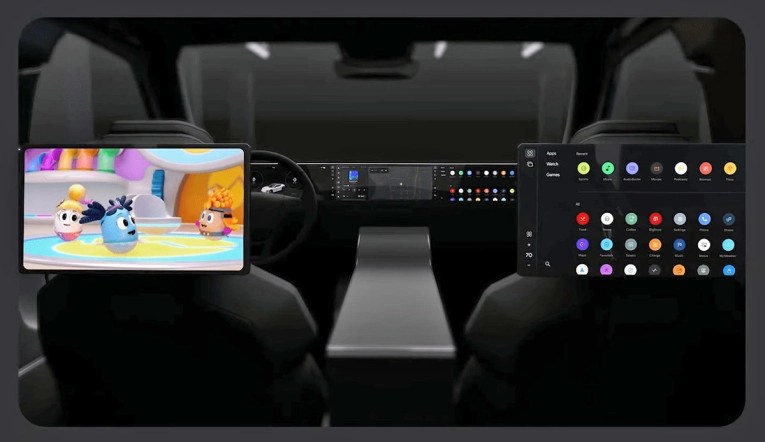
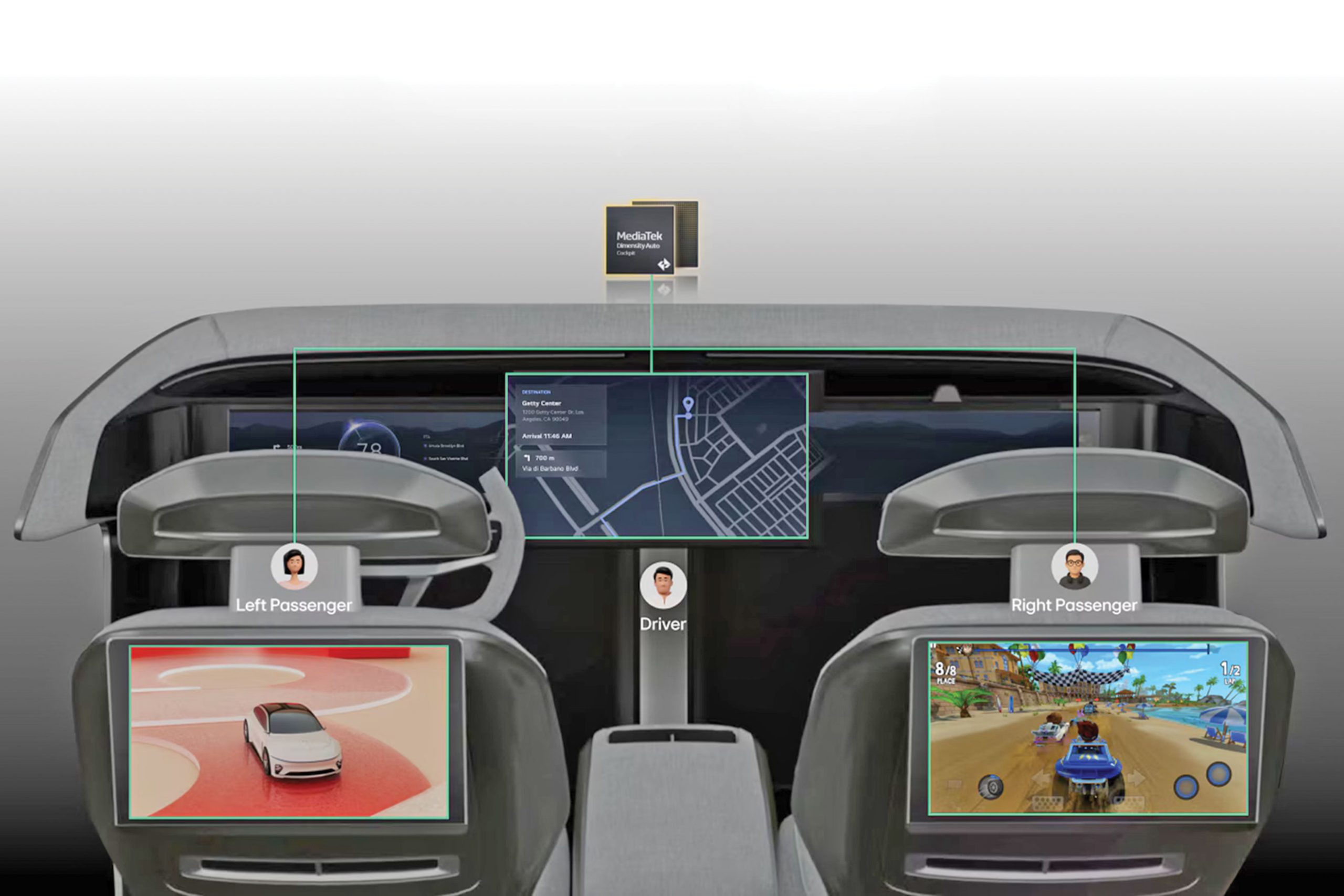
LG capitalized on this innovation and partnered with MediaTek , a semiconductor manufacturer, to create the first architecture based on the new Android. This technology centralizes processing and can control all the vehicle’s screens, in addition to increasing response speed and reducing hardware costs.
Distinct contents
The structure called Concurrent Multi-User (CMU) unifies the operating system and eliminates the need to use Android emulators on additional screens. This optimizes processing, memory, and storage, as well as reducing the system’s weight.
Independent and interconnected
Each display can show different content. So, one passenger can watch a movie, another can play a video game, and the driver can continue viewing the GPS navigation on the main screen. Users can connect their own Bluetooth headphones and even share images between screens.
No distractions for the driver.
The main screen remains subject to legal restrictions: movies, games, or TV programs are still prohibited when the vehicle is in motion, to avoid distracting the driver.
Based on Android
The architecture created by LG uses Android Automotive , Google’s automotive operating system with deep integration into vehicle functions. Brands such as Volvo and GM have already adopted the platform in their models.