Brazilian consumers face a constant dilemma when it comes to replacing tires: investing in a domestically produced tire or opting for an imported one, often attracted by competitive prices. However, the technical answer contradicts this common belief. For driving in Brazil, the product made here has an advantage due to a decisive factor: structural resistance.
The superiority of domestically produced tires lies not in the rubber technology itself, but in their adapted construction. While imported products are designed for the good roads of Europe, Japan, China, or the United States, domestically produced tires undergo a rigorous tropicalization process, which includes significant reinforcement of their casing.
Brazilian tires are reinforced to withstand the impact of potholes, ditches, and degraded asphalt without suffering catastrophic ruptures, explained Roberto Falkenstein, innovative technologies consultant at Pirelli, in the tenth episode of QR Cast. According to the expert, Brazilian tires are even more resistant than European ones. In Europe , where the roads are better, tires don’t need to be as resistant.
Logically, any tire can develop a bulge or burst depending on the speed and the pothole it encounters. But the chance of a locally developed tire surviving this impact is statistically higher. The internal structure (carcass and belts) receives specific reinforcements to withstand the Brazilian reality, something that is often not a priority in global projects.
The real-life laboratory
Before reaching the stores, a domestically produced tire undergoes a technical marathon involving more than 40 different types of tests . A tire isn’t only tested for speed. There are specific tracks to evaluate its behavior on dry and wet surfaces, as well as others designed for measuring noise and braking.

The “trick” lies in the variety of surfaces. In the case of Pirelli’s proving ground in Elias Fausto (SP), there are tracks that replicate cobblestones, concrete, and asphalt with different levels of roughness to ensure that the compound can withstand the abrasion typical of our roads.
Torture 24 hours a day
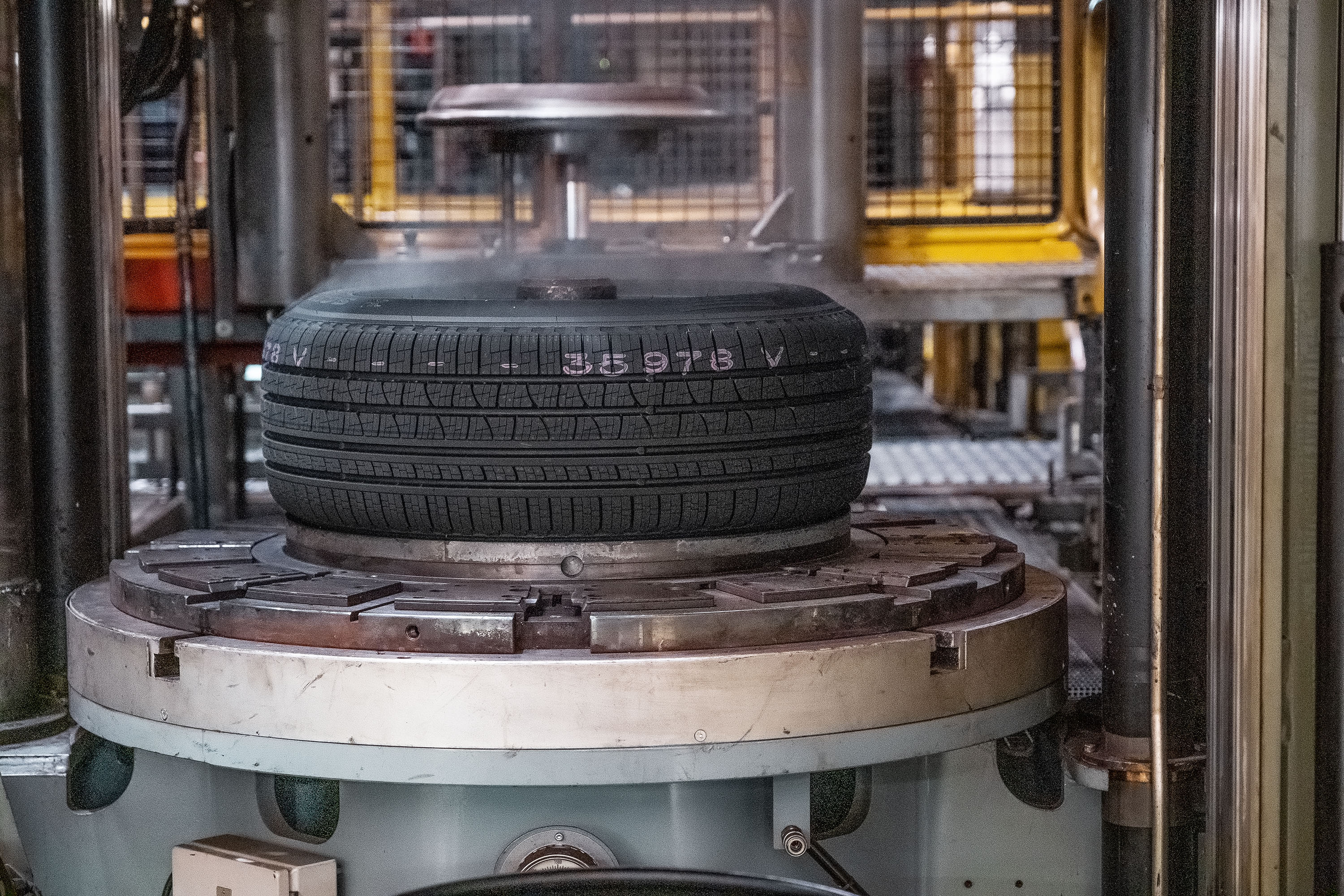
Beyond the track, durability is also proven in the laboratory. The main indoor testing center is located in the factory in Campinas (SP) , with machines where tires run 24 hours a day, seven days a week, subjected to weight and pressure overloads exceeding the recommended limit. The goal is to push the product to its limits to ensure that, under normal use, it has a robust safety margin. Only after passing this “torture” does the tire receive the green light for the market.
Efficiency in your pocket.
Another crucial point tested in these laboratories is rolling resistance. This parameter defines how much friction the tire generates that is detrimental to the car’s efficiency. A modern domestic tire is calibrated to offer the best balance between grip and fuel economy, a requirement of the Inmetro labels that many low-cost imported tires cannot achieve with the same efficiency.