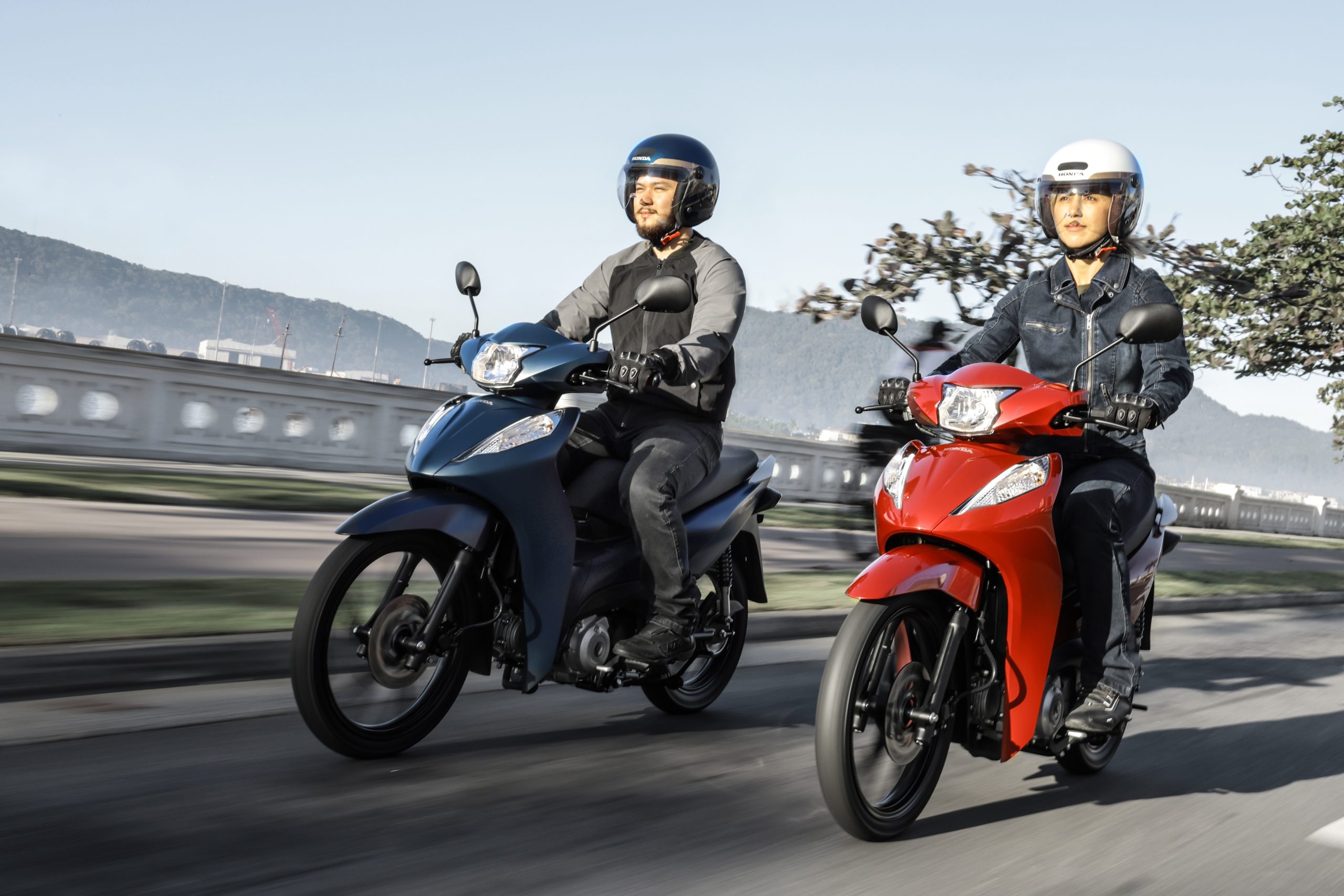
The São Paulo State Government has taken a decisive step towards changing the taxation of two-wheeled vehicles in the state. A bill sent to the Legislative Assembly (Alesp) proposes a total exemption from IPVA (Vehicle Property Tax) for motorcycles up to 150 cc (cubic centimeters). If approved, the measure will take effect from January 1, 2026.
The initiative has the potential to impact more than half of motorcyclists in São Paulo. According to the government, the exemption will cover approximately 2.4 million units, which corresponds to 53% of the total motorcycle fleet registered in the state.

Focus on professional use.
The proposal amends Law No. 13.296/ 2008 and is specifically aimed at individuals. The technical objective of the measure is to reduce the tax burden on a class of vehicles widely used as a work tool, making it easier to maintain ownership for delivery drivers and service providers who depend on agility in urban traffic.
Governor Tarcísio de Freitas emphasized that the exemption was planned to ease the budget without compromising the state’s fiscal balance. The logic is to recognize the economic importance of motorcycles in generating income for millions of people in São Paulo.

Conditions for the benefit
The exemption will not be automatic for those in default. The draft bill stipulates that, to be entitled to the tax benefit in 2026, vehicles must have their registration status regularized.
This means that eligible motorcycles, mopeds, and scooters will need to have their licensing and registration properly up-to-date with the traffic authorities. The measure also serves as an incentive for the regularization of the circulating fleet.

Technical specifications: 150 cc x 160 cc
Although Senate Resolution PRS 3/2019 authorized the exemption for motorcycles up to 170 cc, the specific project for São Paulo establishes the limit at 150 cc.
This creates an important distinction in the market: 160cc motorcycles — the best-selling category in the country currently — are excluded from the benefit. The Honda CG 160, for example, has a 162.7cc engine, exceeding the legal limit proposed by the governor. The same applies to modern scooters such as the Honda PCX 160 and the Yamaha NMax 160 (155cc).
List of motorcycles that will benefit
The exemption covers a wide range of utility models, entry-level scooters, and the entire used fleet of 125cc and 150cc motorcycles that are still heavily circulating in the state. Below are the main models that fall under the “up to 150cc” rule:
Honda
-
Biz line: Biz 125, Biz 110i and older models (100 cc).
-
Pop Line: Pop 110i and Pop 100.
-
Scooters: Elite 125, PCX 150 (older versions up to 2022, with 149.3 cc) and ADV 150 (149.3 cc).
-
CG Line (Used): CG 125 (all generations) and CG 150 (Titan, Fan and Start models manufactured until the arrival of the 160 line).
Yamaha
-
Line 150: Factor 150 (149.3 cc), Fazer 150 (149.3 cc) and Crosser 150 (149 cc). Unlike rival Honda, Yamaha’s current 150 cc models are within the limit.
-
Line 125: Factor 125i, Neo 125 and Fluo 125.
-
Older models: YBR 125 and XTZ 125.
Other Brands
-
Haojue: DK 150, Chopper Road 150, Lindy 125, Master Ride 150.
-
Shineray: Worker 125, Jeff 150, Jet 125.
-
Mottu: Sport 110i.