
The São Paulo State Finance and Planning Department (Sefaz-SP) has released the payment schedule for the tax , as well as information on assessed values. In addition, the department also revealed which vehicle type generates the highest IPVA (Vehicle Property Tax) revenue in the state.
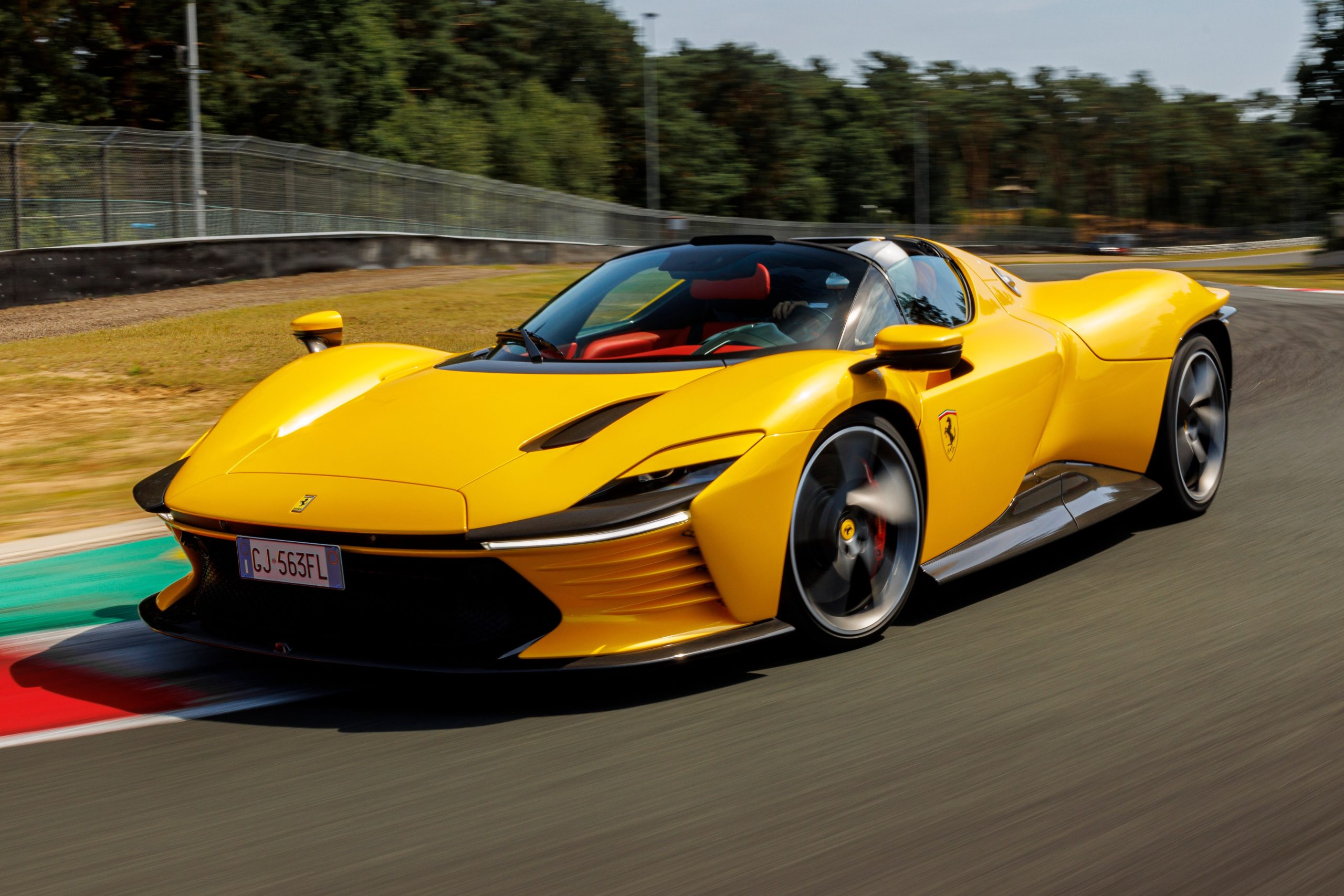
If in 2025 the car with the most expensive IPVA (Brazilian vehicle tax) was a Porsche 918 Spyder , in 2026 the title will belong to the 2023 Ferrari Daytona SP3. There is only one unit of this model registered in the state, whose owner will have to pay R$ 731,677.08 in tax . The sports car is valued at R$ 18,291,927.00, according to the Fipe table .
What is the Ferrari Daytona SP3 like?
Based on the LaFerrari , the Daytona SP3 had a limited production run of 599 units. From the LaFerrari, it retained some of the body shape and, most importantly, the 840 hp V12 engine .
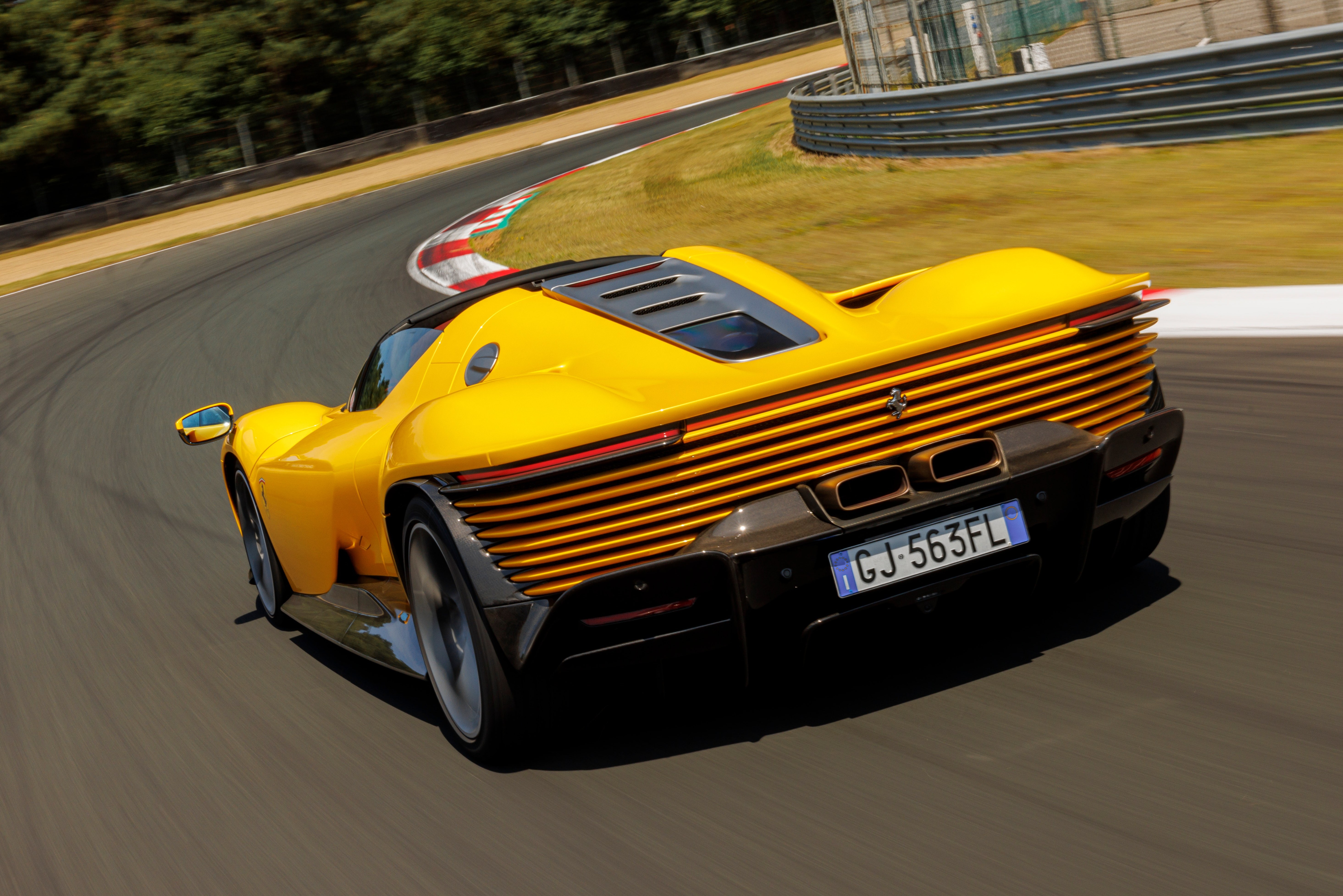
The design was defined with the aim of increasing aerodynamic performance, featuring intakes that allow air to be channeled to the right places, but also recalling Ferrari’s golden age in racing. There are references to the Ferrari P3/4, P330 and 412P. The air intakes embedded in the doors are inspired by the Ferrari 512 S.

Extensive use of carbon fiber is made in the car ‘s body and monocoque , and it has a removable targa-style roof. The doors open upwards and to the sides.
The headlights with retractable covers are reminiscent of a detail from old supercars that disappeared for safety reasons.

The rear, with blades running from end to end, also evokes cars from decades ago. But the Daytona SP3 has an LED light bar that illuminates from end to end.
The central exhaust outlets are positioned high, above what would actually be the rear bumper. In total, this Ferrari weighs 1,485 kg.

Measuring 4.69 m in length, 2.05 m in width, a mere 1.14 m in height, and with a 2.65 m wheelbase, the Ferrari Daytona SP3 uses the well-known naturally aspirated 6.5-liter V12 engine, in a version producing 840 hp and 71.1 kgfm of torque, combined with a 7-speed dual-clutch F1 transmission.
This engine uses titanium connecting rods, which are 40% lighter than steel ones. It accelerates from 0 to 100 km/h in 2.85 seconds, while its top speed is 340 km/h. Furthermore, it reaches 200 km/h in just 7.4 seconds.