
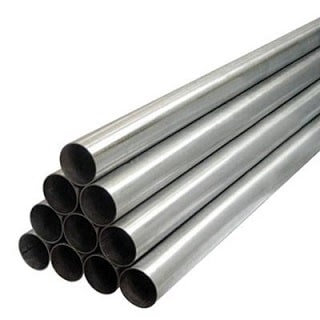
A little more about what stainless steel tubing is used for and its applications in projects.
to the stainless steel tube?
Stainless steel tubing is one of the most versatile and indispensable components in various industrial sectors.
This is because it has an application that goes far beyond aesthetics; that is, it is chosen for its unique properties, which guarantee durability, safety, hygiene, and chemical and thermal resistance .
Whether for transporting liquids, gases, or conducting heat and cold, stainless steel pipes are used in a variety of sectors, including food, pharmaceutical, chemical, petrochemical, automotive, and healthcare.
Transporting liquids in continuous and safe industrial processes.
In any industrial process involving fluid movement , the choice of piping material is crucial to ensuring the efficiency and safety of the operation.
Stainless steel stands out for its chemical stability, corrosion resistance, and ease of cleaning.
Pipelines transport aggressive fluids without contamination or loss.
Stainless steel tubing is widely used to transport corrosive liquids, acids, bases, oils, solvents, and even sensitive organic substances . It withstands the action of these fluids without suffering wear or releasing particles that could contaminate the product.
This property is essential in the chemical and petrochemical industries, where pipeline integrity is fundamental to process safety and the preservation of the properties of the liquid being transported .
Stainless steel ensures purity and stability in process lines.
In addition to its durability, stainless steel does not interfere with the chemical composition of liquids , which means it is ideal for applications that require purity, such as in the production of cosmetics, beverages, or laboratory reagents.
Its smooth surface reduces friction and prevents the accumulation of residue, maintaining flow stability and contributing to the continuous efficiency of the production line .
Gas handling in controlled industrial environments
In addition to liquids, stainless steel tubing is essential for transporting industrial gases , which are often highly pressurized or flammable.
In this case, safety is a priority, and stainless steel offers the necessary performance for critical applications.
The structure safely withstands pressure and temperature.
Stainless steel tubing is resistant to high pressures and temperatures , making it ideal for systems that transport gases such as oxygen, nitrogen, carbon dioxide, compressed air, or natural gas.
Therefore, its composition allows it to maintain its integrity even in extreme operating environments , without risk of cracks or leaks.
This durability makes stainless steel tubing ideal for installations in pharmaceutical industries, laboratories, hospitals, and automated industrial plants.
Durable material prevents leaks in pressurized systems.
Thanks to its solid structure and effective sealing at the connections, stainless steel tubing minimizes the risk of leaks , protecting the work environment and ensuring the efficient use of the transported gas.
In pressurized systems, such as compressors and storage tanks, this reliability reduces losses, increases safety, and prevents production interruptions .
Use in industrial thermal and refrigeration systems.
Another common use of stainless steel tubing is in thermal and refrigeration systems , which are essential for controlling temperature in various industrial processes.
Thanks to its thermal resistance and consistent performance under extreme variations, stainless steel is the most suitable choice for these applications.
Stainless steel tube maintains performance under intense heat variations.
In lines that transport steam, hot water, thermal fluids or refrigerants, stainless steel tubing maintains its shape and functionality , even under rapid temperature changes.
It does not suffer from deformation, rupture, or thermal corrosion, ensuring a longer system lifespan and less corrective maintenance .
This property is essential in sectors such as the beverage, baking, dairy, paint and resin industries, where thermal control is crucial for product quality.
Commonly used in heat exchangers and refrigerated ducts.
Stainless steel tubing is widely used in heat exchangers, coils, condensers, and evaporators , where heated or cooled fluids circulate.
In this way, its efficient heat conduction and resistance to thermal shock make it ideal for continuous heating and cooling cycles , common in sensitive industrial processes.
Furthermore, the material’s durability ensures reduced costs for replacing parts and increased system reliability .
Employment in the food and pharmaceutical industries is for hygiene reasons.
When it comes to industries highly sensitive to contamination, such as food and pharmaceuticals , stainless steel tubing is practically mandatory. This is because it combines hygiene, chemical resistance, and durability , meeting the most demanding industry standards.
Smooth surface prevents buildup of residue and microbial growth.
The surface of stainless steel is naturally hygienic , with low roughness, making it difficult for biofilms to form, organic debris to accumulate, or bacteria to proliferate.
This feature is essential for production lines that handle milk, juices, pasta, syrups, pharmaceutical solutions, and cosmetics.
Furthermore, stainless steel does not absorb odors or alter the properties of the products it transports, which guarantees the integrity of the flavor, color, and chemical composition of the raw materials and final products.
It meets sanitary requirements with proven efficiency and durability.
Stainless steel piping is compatible with CIP (Cleaning in Place) and SIP (Sterilization in Place) cleaning processes, allowing for internal sanitization without the need for disassembly .
This not only ensures compliance with Anvisa, FDA, MAPA, and ISO standards , but also increases productivity , since cleaning stops are faster and more efficient.
Therefore, whether for transporting liquids and gases, for thermal control, or in applications with high sanitary standards, stainless steel tubing stands out for its versatility, reliability, and long service life .
Investing in this type of piping means betting on greater efficiency, less maintenance, and higher quality at every stage of your production process.